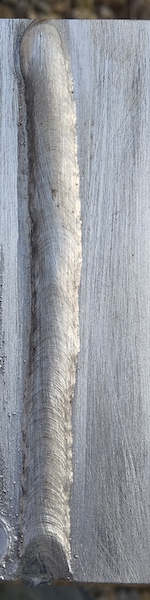
Welding trials on/around 24July2026.
Recommended welding conditions for heavier/thicker aluminium plate - see final section headed "Baseline - recommended welding conditions".
I have already suggested remedies in previous email message(s).
Current around 240A - Volts not clearly known given Voltmeter
has problems - likely about 25V to 26V(?).
"supersoft" CV arc adjustment setting.
Runs quite well.
Good question is "why?!" given next sections...
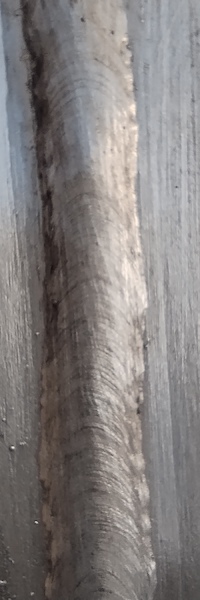
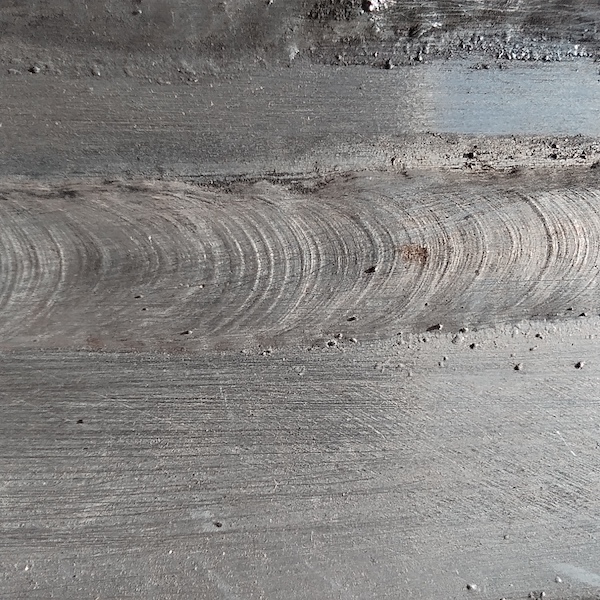
Representative example welding condition: 233A at 25.9V
given fine adjustments sought better welds.
"Arc-control" setting 2.75 = "normal"
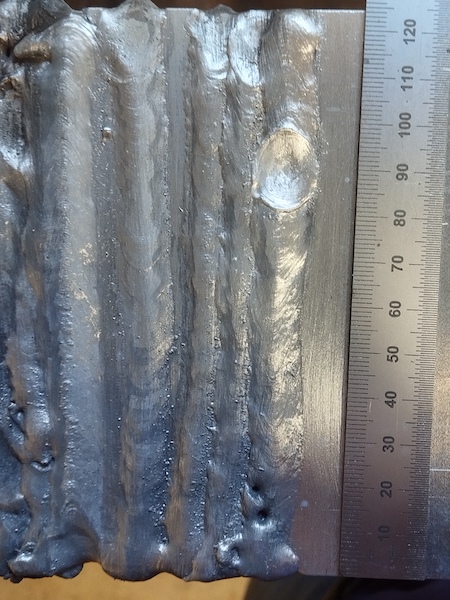
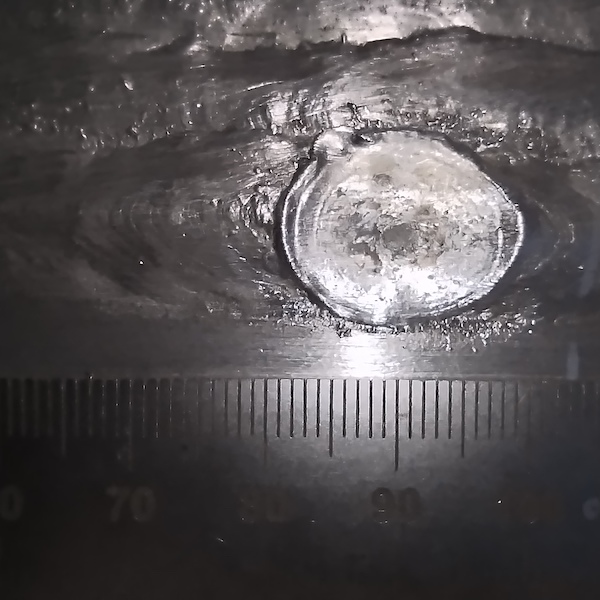
About the middle (mid-width) of the first picture... (weld to right-hand-side is the 1.2mm-wire weld)
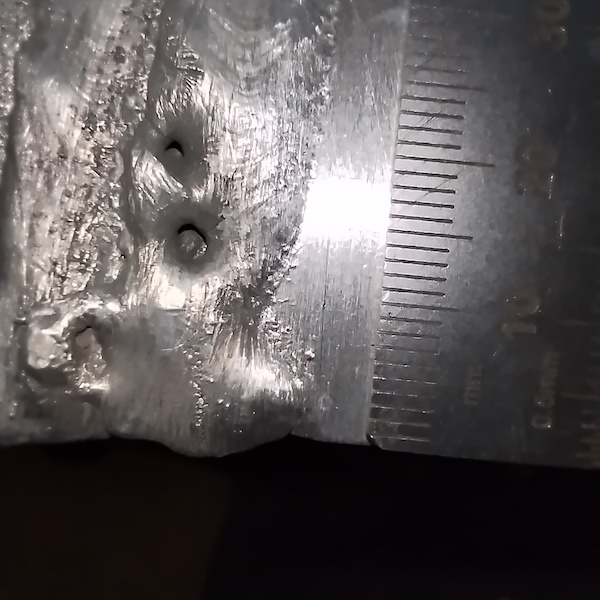
"Wild" "ferocious" deep melt and pores to fusion-boundary - very sooted in pores.
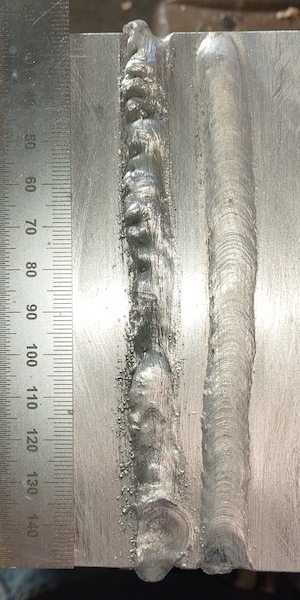
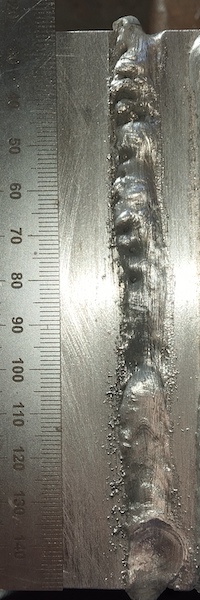
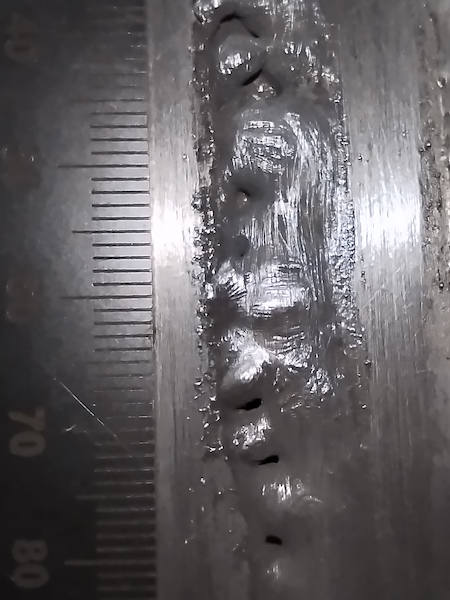
"Wild" excessive heat and melting - seen in poor bead-placement and very poor shapes especially at starts and stops.
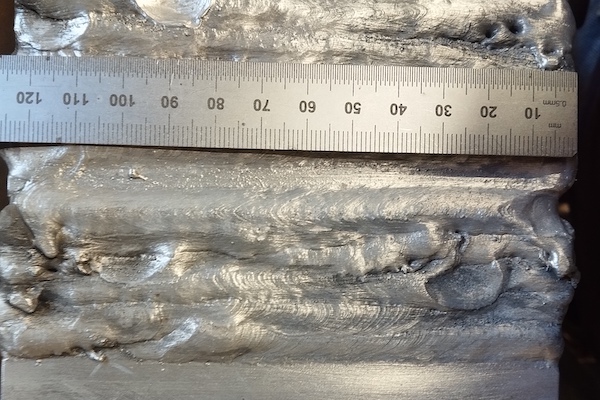
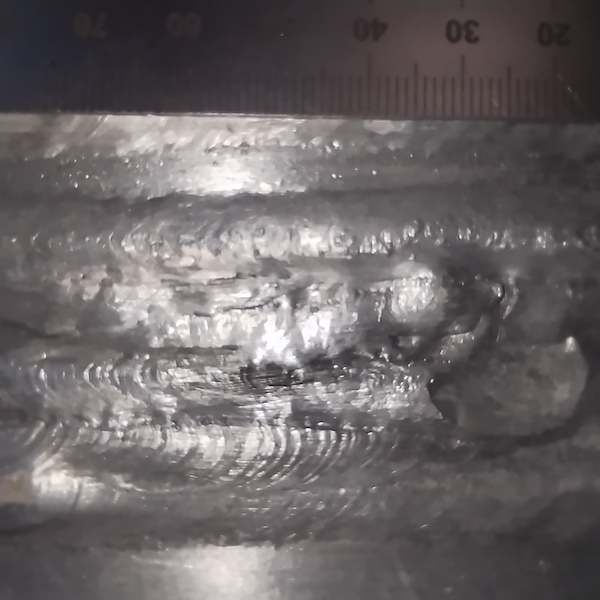
"Crazy" "wild-deep" melting and deep pores to the fusion-boundary
Highly regarded:
The James F. Lincoln Arc Welding Foundation
Lincoln Foundation "The Procedure Handbook of Arc Welding"
(14th Edition)
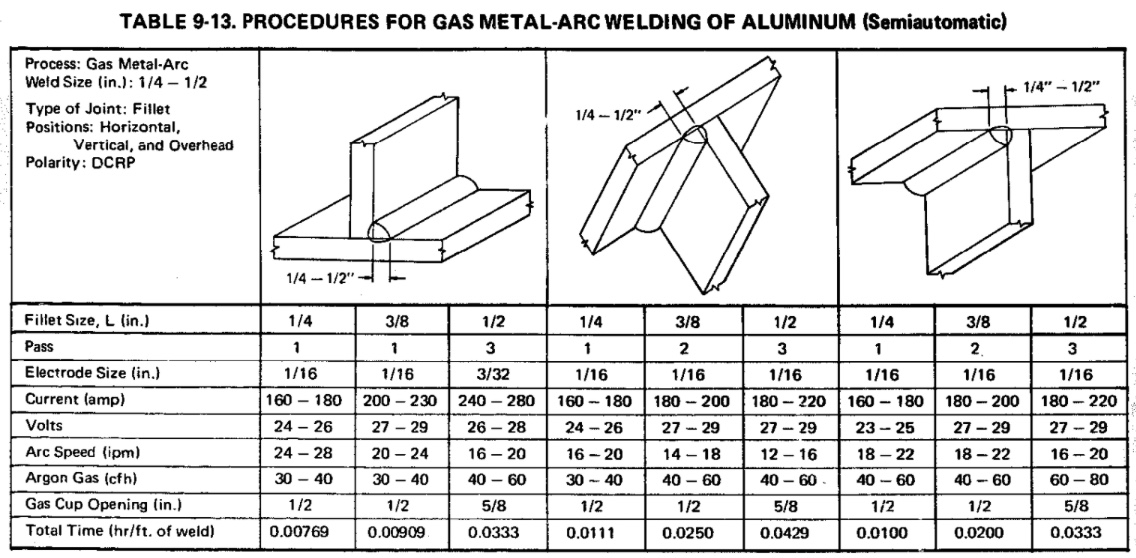
All but the thickest (one case) recommend 1/16th-inch wire - which is
1.6mm (1/16"=1.5875mm)
[thickest recommends 3/32nd-inch ~= 2.4mm]
Down at 160A to 180A they are recommending 1/16" ...
My welding on heavier 5000-series Al-Mg is at around 230A.
These conditions recommended are what you will exactly land upon if you observe the welding condition, getting good arc-cone formation while adjusting power to fall between "too cold" and "too hot" - that range being about 1/100th part of the power you are on.
Historically (these conditions were maybe formulated in the 1960's?) welding machines did these welds. I have experienced that - working on marine fabrications.
(R. Smith, 07Oct2026 to 08Oct2026)